- The AI Property Manager
- Posts
- How AI Took Over Property Management in 2025
How AI Took Over Property Management in 2025
What changed, who won, and why manual operators fell behind
THE COURSE YOU’VE BEEN ASKING IS ALMOST HERE!!!
Join the Waitlist to Transform Your Property Operations & Scale Your Revenue
Your competitors are already automating: maintenance routing, resident comms, inspections, renewals, onboarding.
This 4-week course shows you how they’re doing it and how you can replace 10-20 hours/week of admin with clean, automated workflows that run themselves.
Everything is step-by-step.
Everything is ready to deploy.
Everything is built for actual PM workflows.
FREE BONUS 👇👇👇👇
Join the waitlist and get the complete Maintenance Triage Automation System immediately - your first automation, done for you, delivered to your email.
AI Is Not “Improving” Property Management. It Is Rewriting Its Economics.
Property management has always been a margin business disguised as a service business.
The economics were simple. Charge a percentage of rent. Hire people to manage exceptions. Absorb inefficiency as “the cost of doing business.”
That model worked only because the industry ran on fragmentation, opacity, and slow information flow.
AI breaks all three at once.
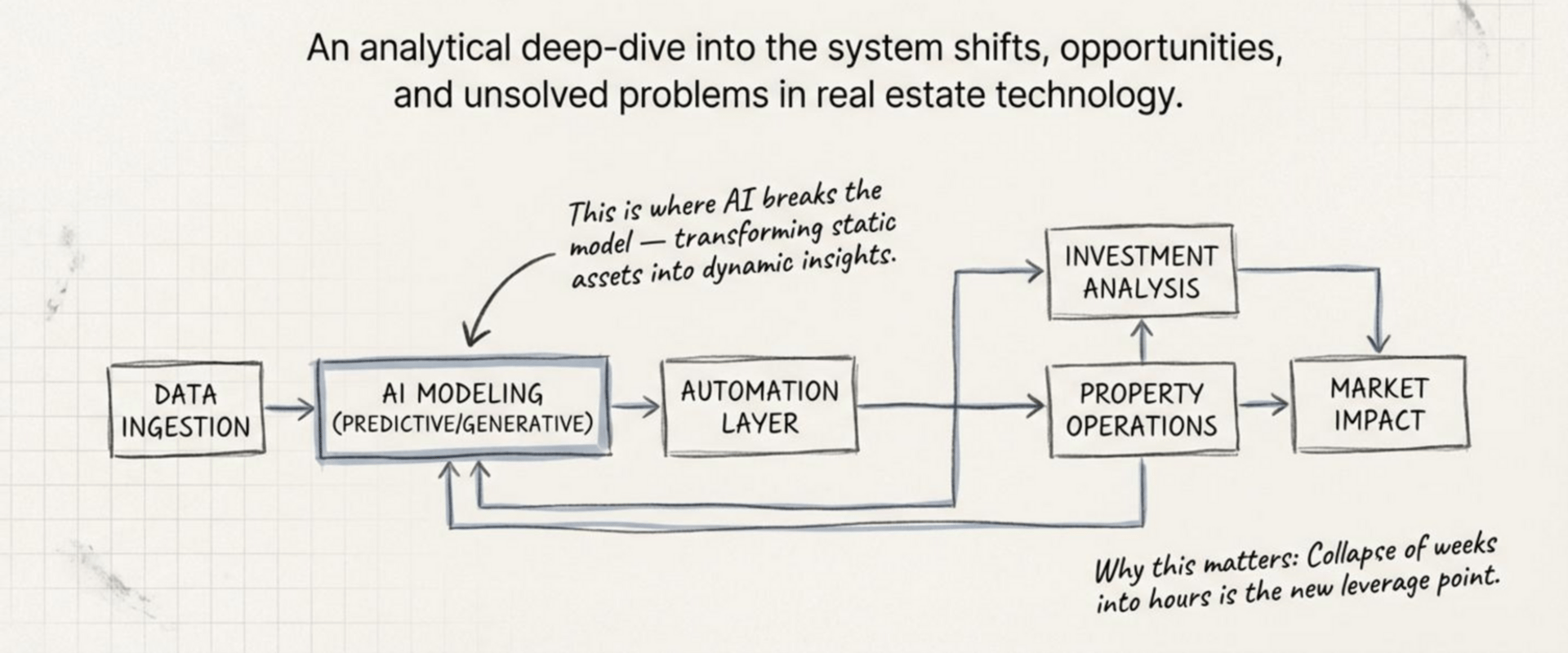
This is not a story about automation saving a few hours per week. It is a story about where control shifts when intelligence moves upstream from people to systems.
The Core Problem Property Management Never Solved
At its core, property management is not about property. It is about coordination under uncertainty.
Every day, a property management operation must coordinate tenants, vendors, owners, compliance deadlines, financial flows, and regulatory constraints across hundreds or thousands of micro-decisions.
Historically, this coordination happened through people. Emails. Spreadsheets. Phone calls. Institutional memory.
This worked at small scale but collapsed as portfolios grew.
The result was predictable.
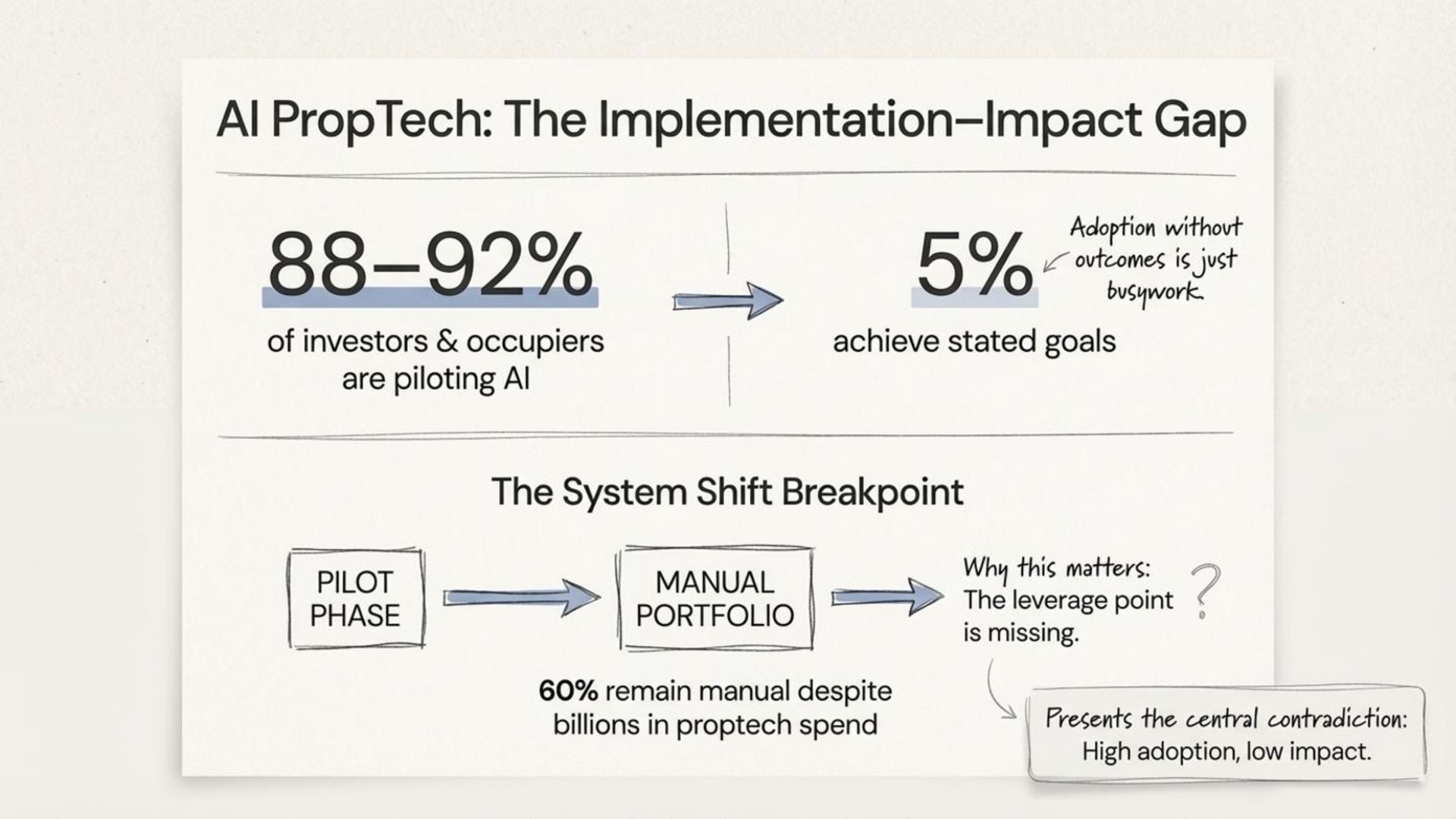
Manual maintenance triage caused delays and tenant dissatisfaction. Spreadsheet accounting hid underperforming assets. Inbox-driven renewals led to missed revenue. Compliance tasks were handled reactively rather than systematically.
None of these were failures of effort. They were failures of architecture.
AI changes the architecture.
Why AI Changes the Cost Curve, Not Just the Workflow
Traditional software made people faster. AI replaces the dependency on people entirely in specific layers of the system.
The key difference is parallelism.
A human processes tasks sequentially. An AI system processes signals in parallel.
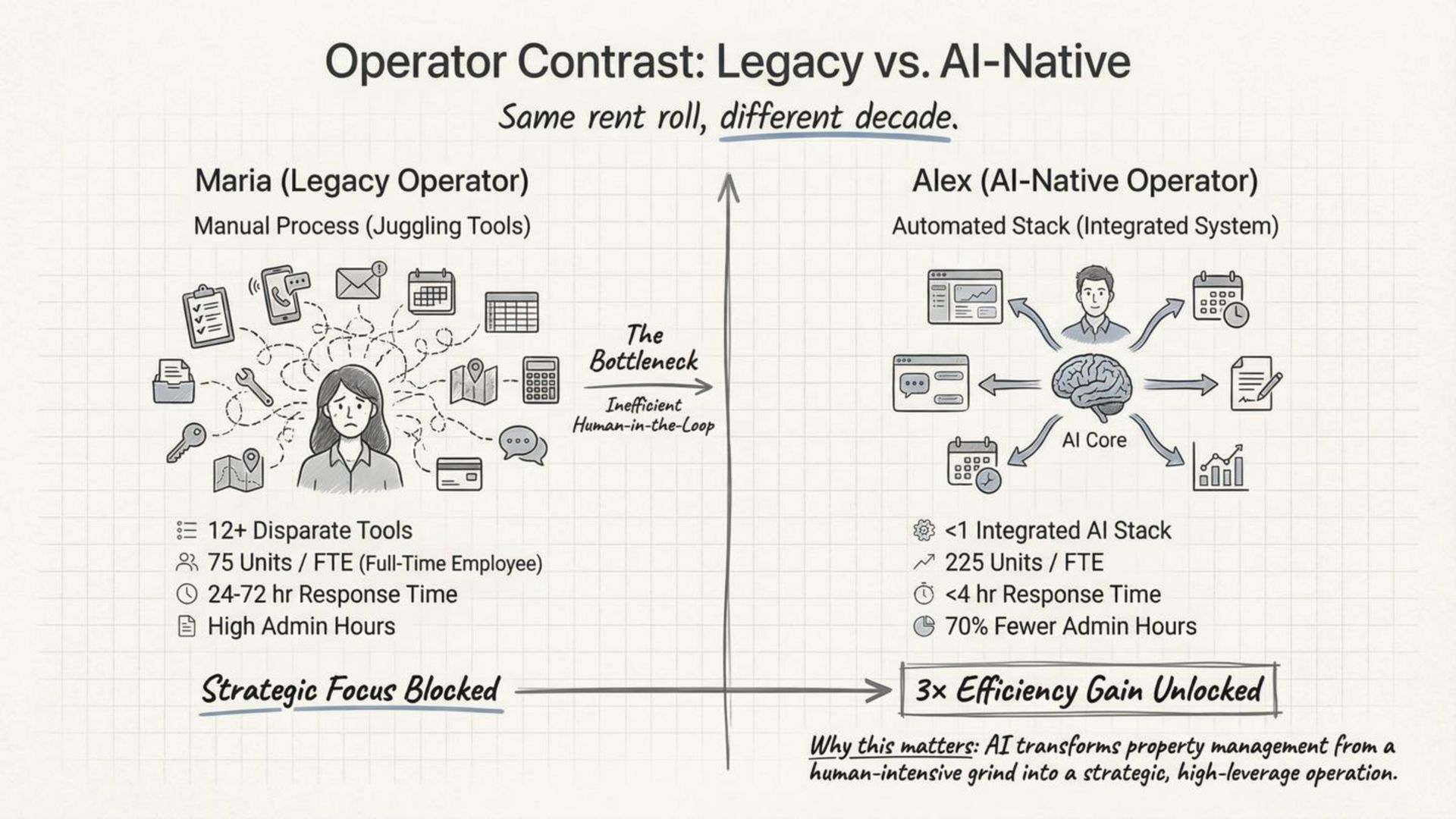
In a traditional operation, a maintenance request enters an inbox. A coordinator reads it. Determines urgency. Checks vendor availability. Sends emails. Follows up. Updates the tenant.
In an AI-native operation, the request is classified, routed, scheduled, and communicated automatically. The system escalates only if thresholds are breached.
The difference is not speed alone. It is predictability, consistency, and scalability.
This is why AI adoption does not just reduce headcount. It collapses the marginal cost of growth.
According to McKinsey, AI-driven operations in asset-heavy industries reduce coordination cost by 20 to 40 percent when deployed systemically rather than as point solutions (McKinsey, 2024).
Property management is exactly such an industry.
The Three Layers AI Is Rewriting
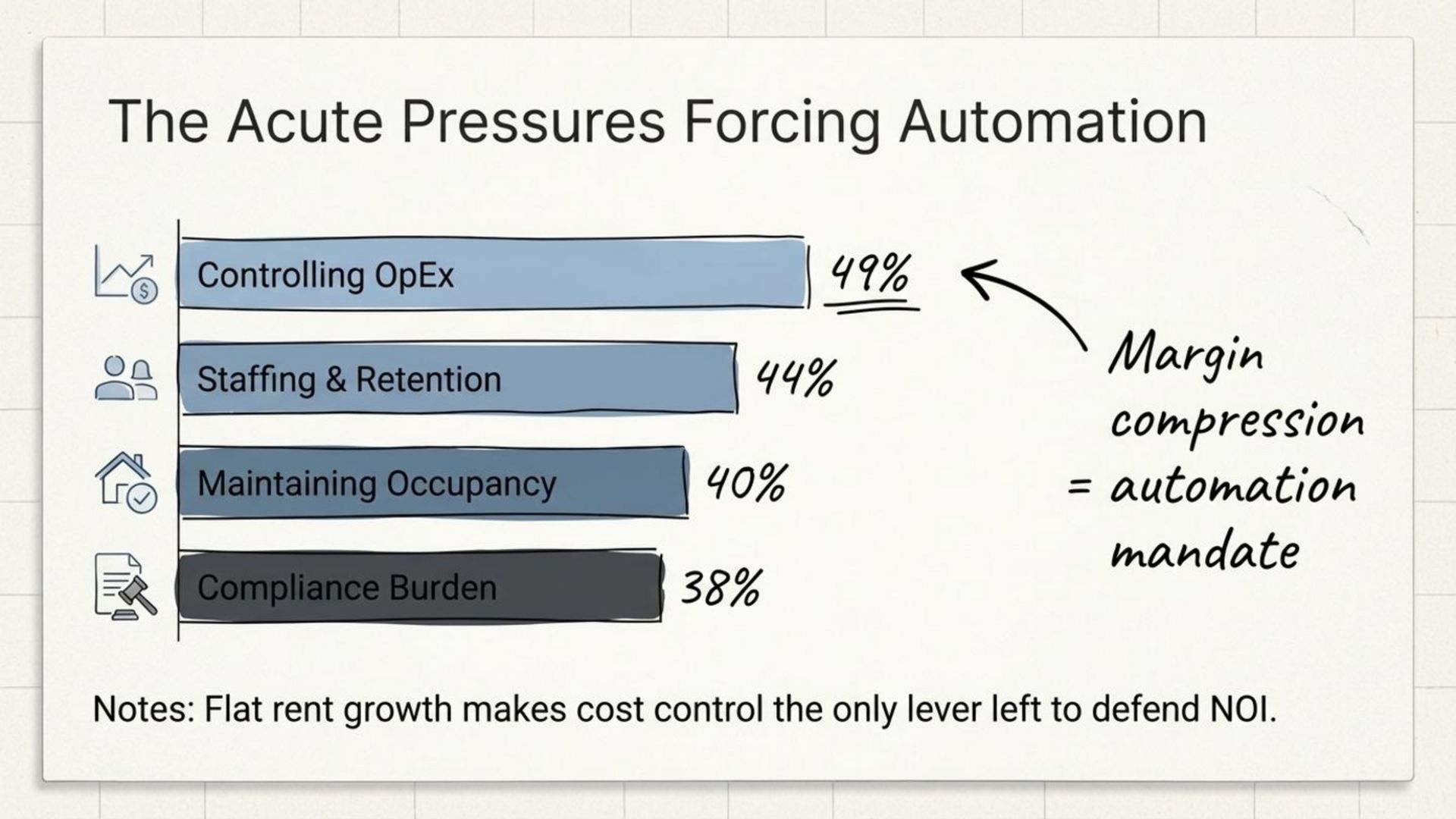
AI is not attacking property management evenly. It is rewriting three specific layers that define who captures value.
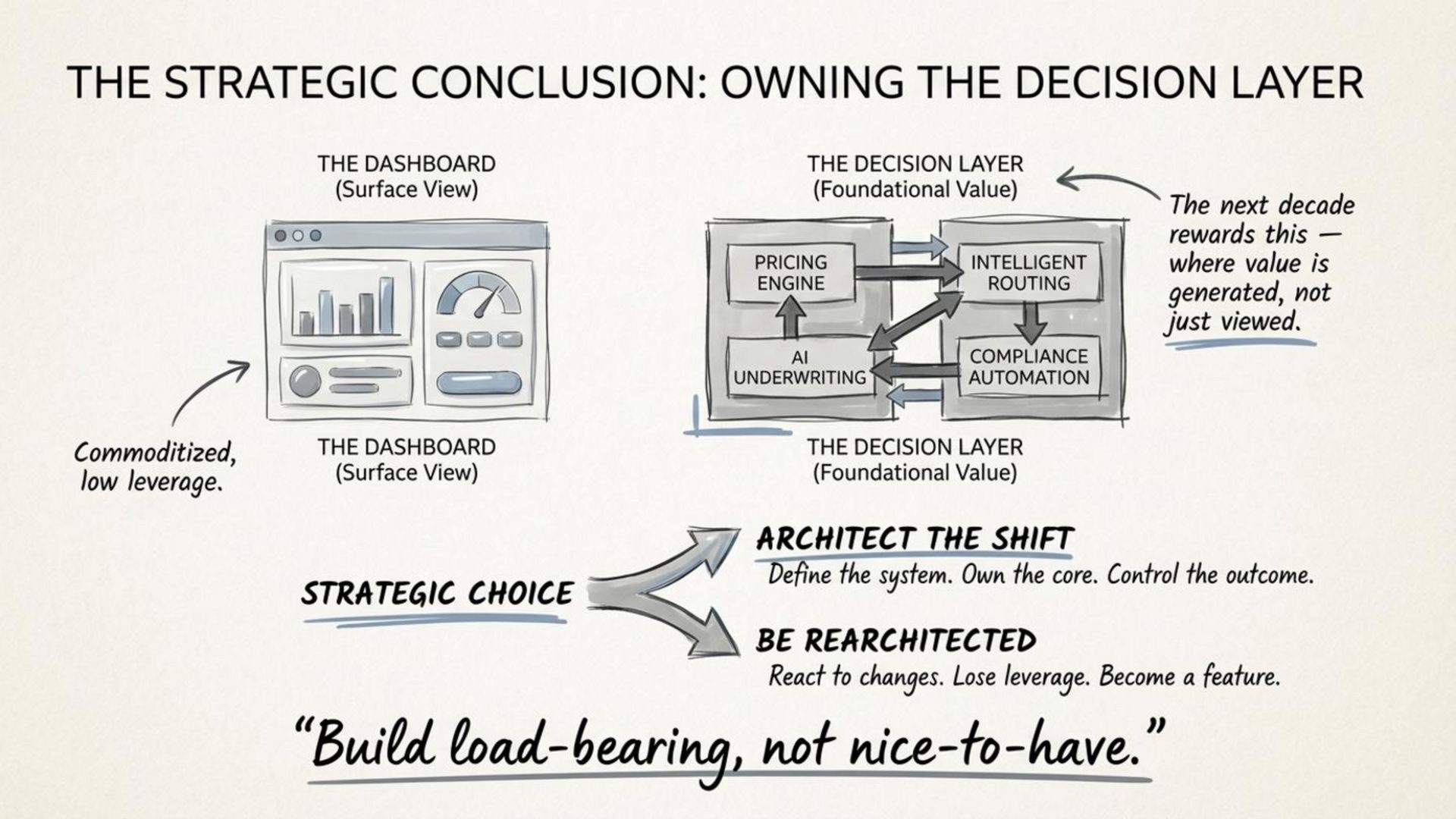
1. Decision Layer
This is where prioritization happens.
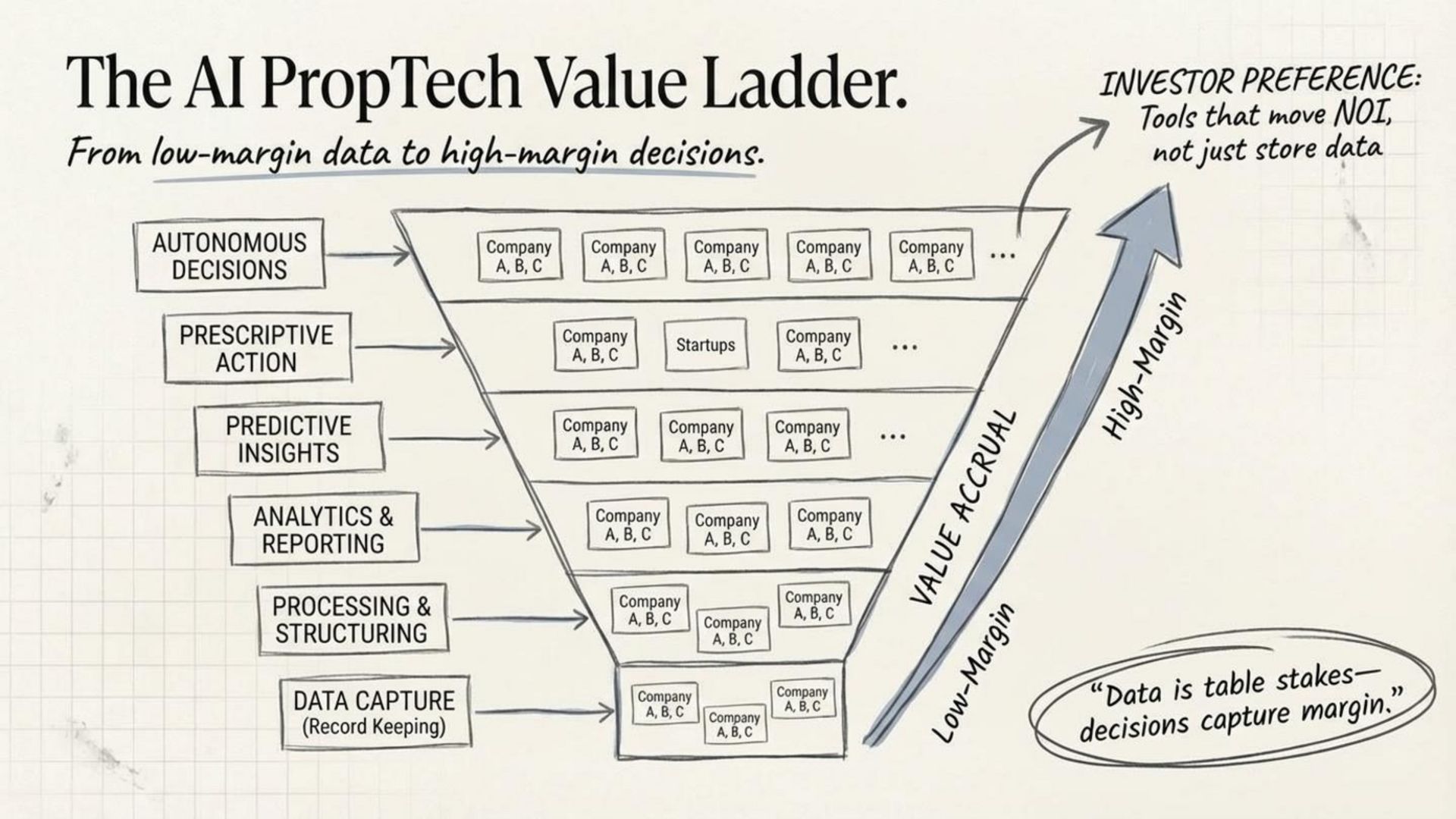
AI underwriting platforms analyze pricing, risk, yield, and neighborhood trajectories using millions of data points. What used to take analysts weeks now takes hours.
This shifts decision power away from experience and toward probabilistic modeling.
Platforms like Diald AI and BuiltAI demonstrate this clearly. Investment committees increasingly value speed to decision over exhaustive analysis. AI compresses diligence timelines and reshapes deal flow economics (Commercial Observer, Dec 2025).
2. Workflow Layer
This is where execution happens.
AI systems now manage maintenance routing, renewals, onboarding, inspections, and vendor coordination with minimal human intervention.
The critical insight is that workflows improve not because AI is “smart,” but because it enforces structure. Every task has a state. Every state has rules. Every rule has escalation paths.
This is why AI-enabled PMS platforms consistently outperform human-managed operations on response time and tenant satisfaction (PwC, Dec 2025).
3. Financial Layer
This is the most underestimated shift.
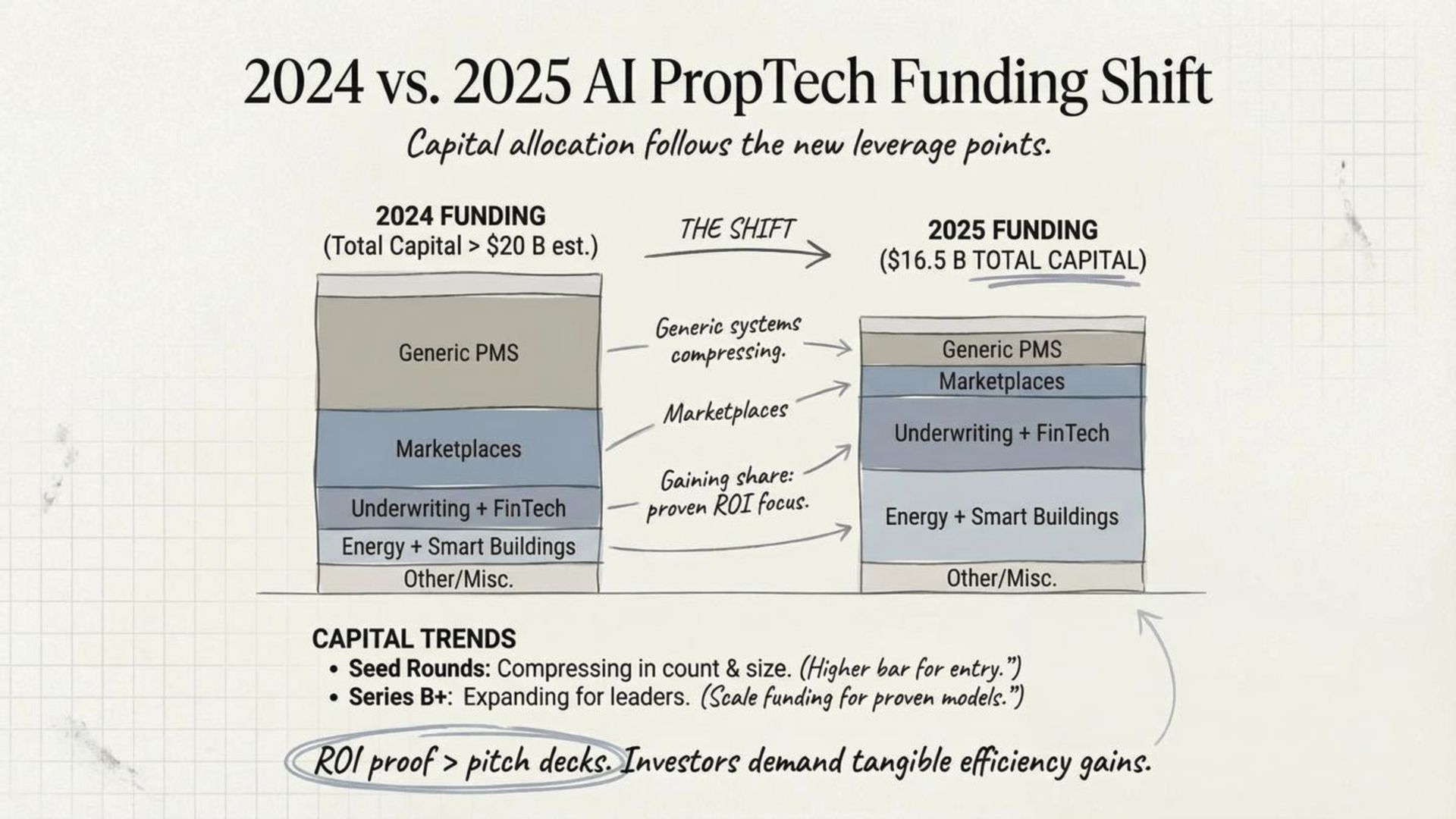
Platforms like Bilt and Baselane show that controlling financial rails is more powerful than controlling dashboards.
When rent payments become embedded in loyalty networks, credit systems, or property-level banking infrastructure, behavior changes.
Tenants pay on time not because they are chased, but because incentives align. Landlords retain tenants not because of better service alone, but because switching costs increase.
This is infrastructure power, not software convenience.
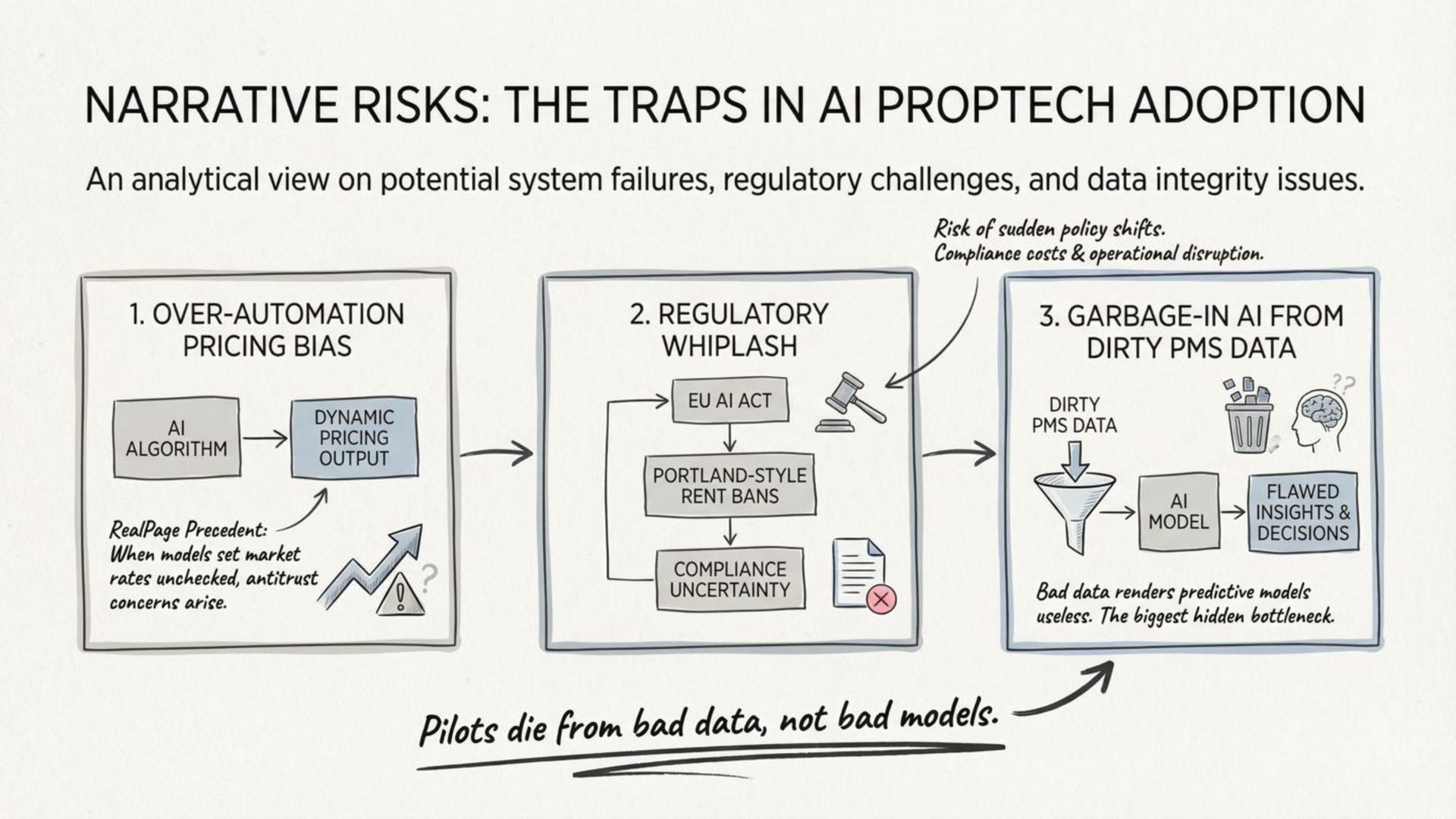
Why Portals and Commission Models Are Structurally Weak
Portals and commission-based intermediaries survive by owning attention, not outcomes.
Their systems are built on static listings, filters, and paid placement. They monetize exposure rather than conversion.
AI search systems do the opposite. They optimize for match quality, availability certainty, and likelihood of transaction.
Once discovery becomes conversational and probabilistic, portals become data sources rather than decision engines.
This mirrors what happened to job boards after LinkedIn introduced algorithmic matching, and to travel agents after platforms integrated pricing and booking directly.
Harvard Business Review describes this pattern as “intelligence migration,” where platforms lose power once decision logic moves closer to execution (Harvard Business Review, 2024).
Property is following the same path.
What This Means for Property Managers
This shift is not theoretical. It is operational.
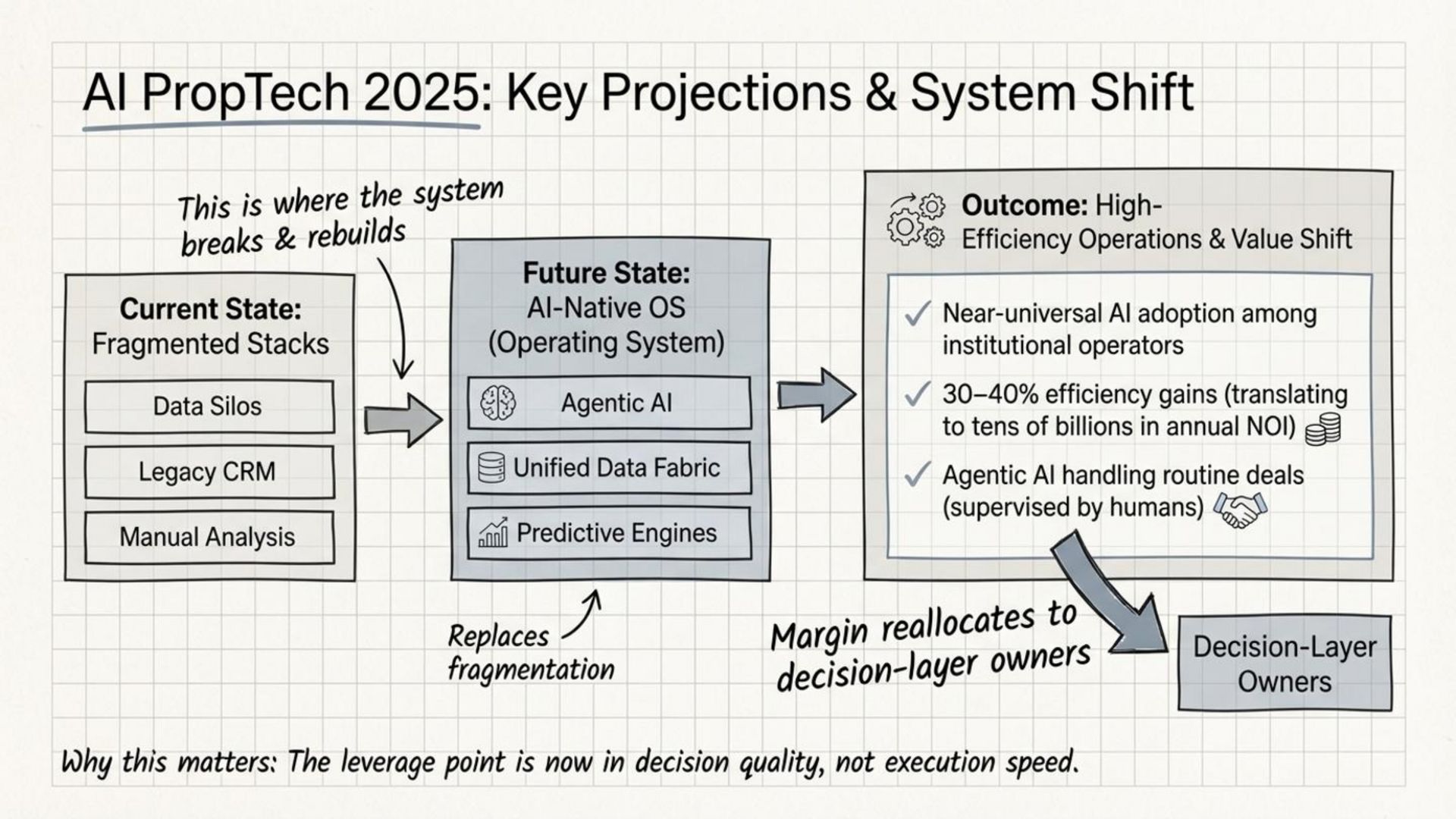
Property managers who adopt AI as an overlay will see limited gains. Property managers who rebuild their systems around AI will see structural advantage.
The difference is whether AI is asked to assist people or whether people are asked to supervise systems.
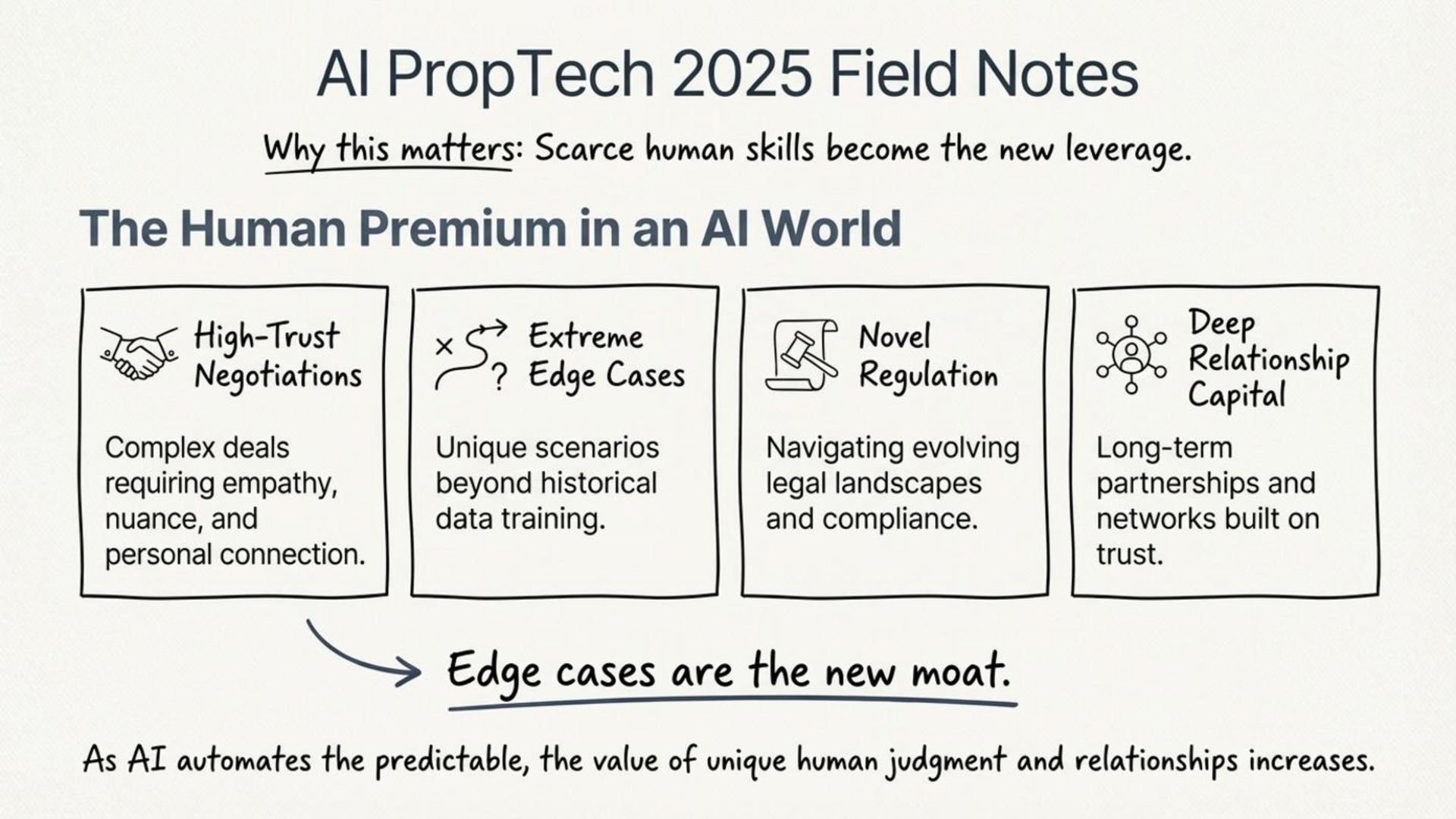
In AI-native operations, humans handle exceptions. Systems handle everything else.
This is why teams managing thousands of units are now run by fewer people than teams managing hundreds just five years ago.
The leverage comes not from working harder, but from designing better systems.
The Emerging Stack That Wins
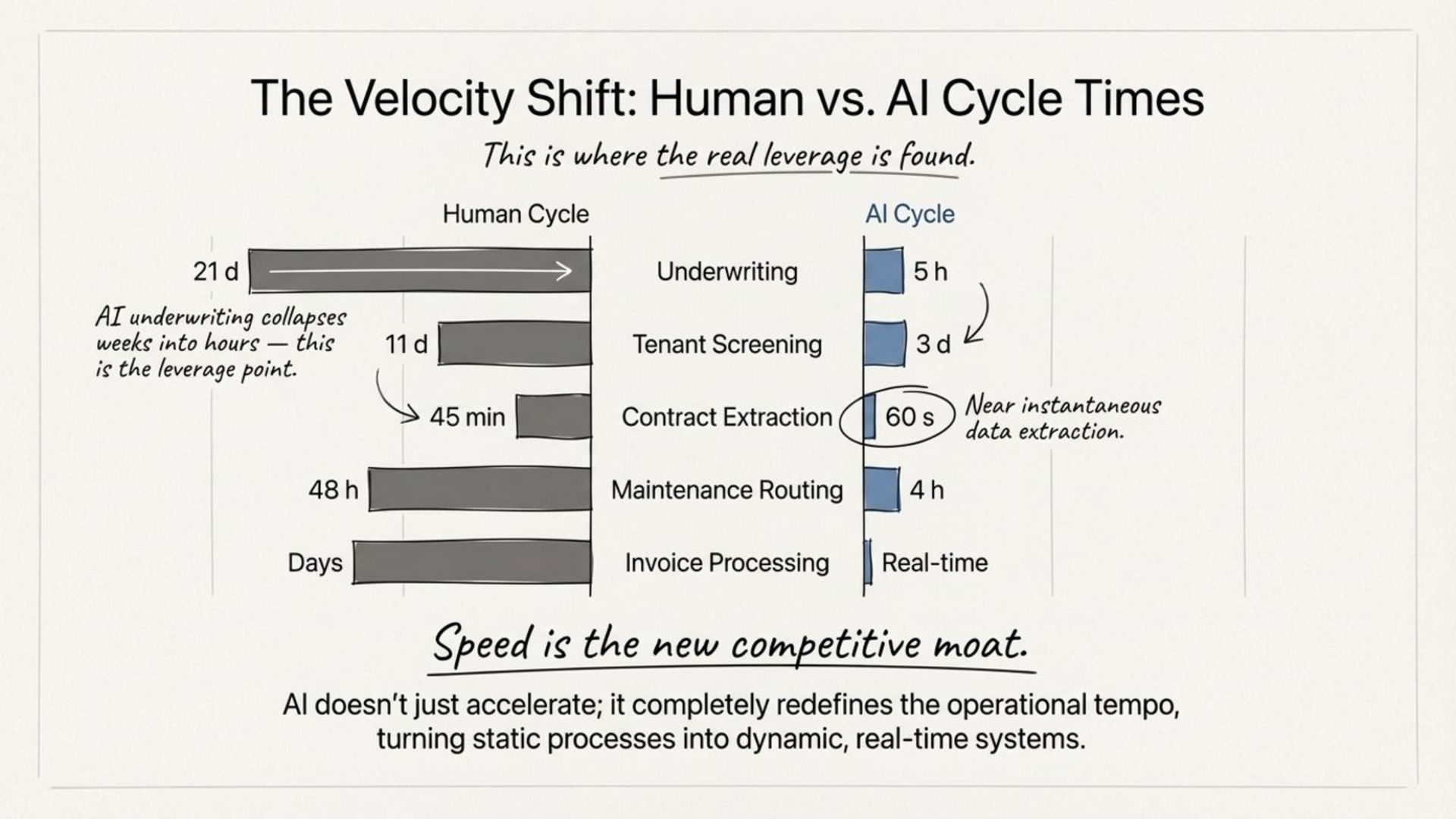
The winning architecture is becoming clear.
An AI decision layer evaluates pricing, risk, and prioritization. A workflow engine executes leasing, maintenance, and compliance automatically. A financial layer handles rent, incentives, and reporting at the property level. Feedback loops continuously improve the system based on outcomes.
This is why PMS platforms are racing to add AI. It is also why AI startups are racing to connect directly into inventory systems.
The platform that owns the workflow owns the data. The platform that owns the data owns the intelligence.
The Real Takeaway
AI is not replacing property managers.
It is replacing the parts of the job that never created leverage in the first place.
The next generation of property management will not be built on more staff, more tools, or better dashboards.
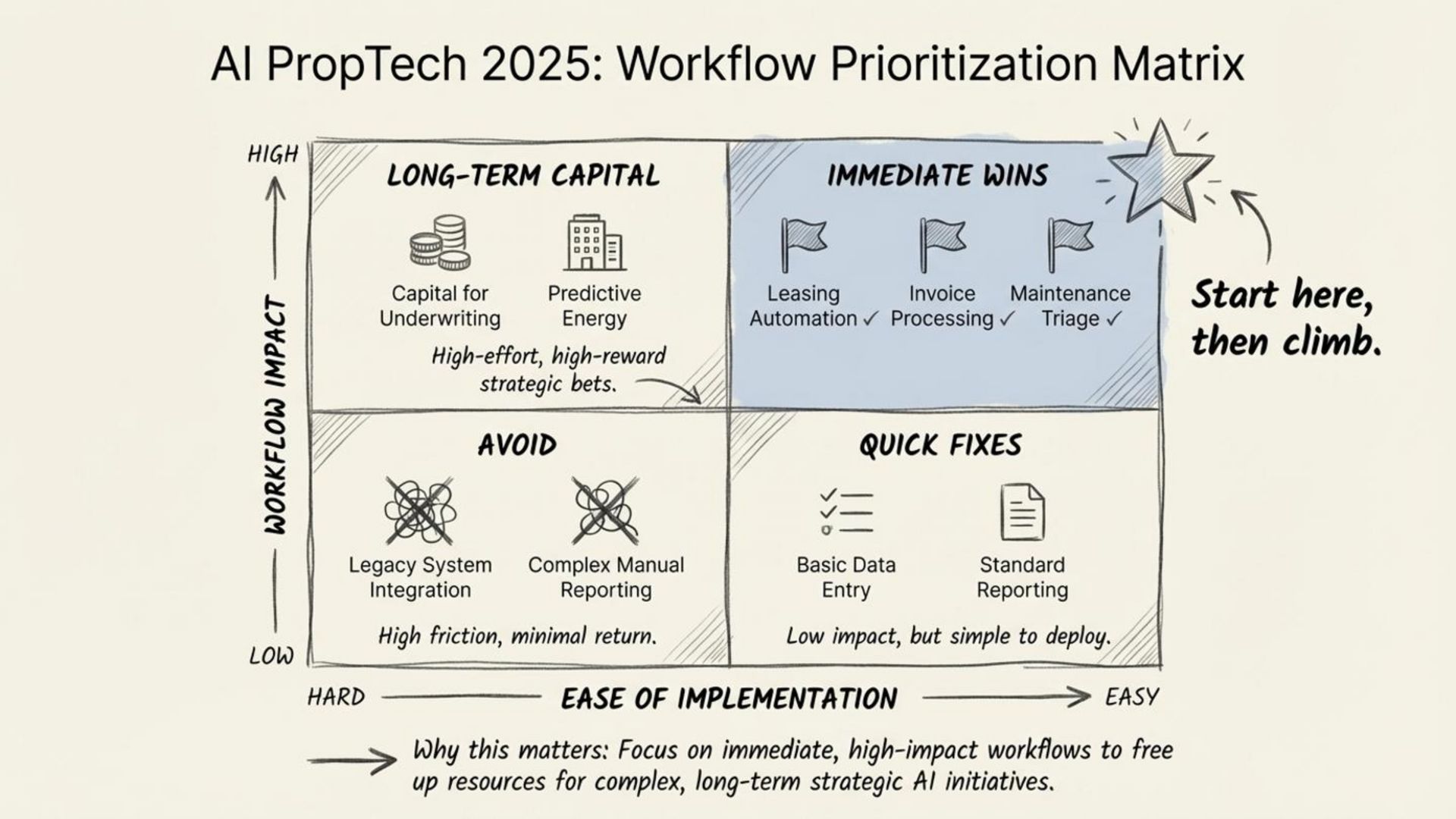
It will be built on systems that think, route, decide, and execute automatically.
The winners will not be those who adopt AI first.
They will be those who restructure their operations around it.
And the gap between those groups will not be incremental.
It will be permanent.
Property management is changing fast, the operators winning now are the ones building automated systems, not adding more admin.
AI onboarding, automated maintenance flows, renewal pipelines, portfolio dashboards, this is the new baseline.
If your business still runs on inboxes, spreadsheets, and memory… you’re already behind.
Want to learn how to automate your entire operation step-by-step?
You’re going to want this one, it’s a game-changer.